


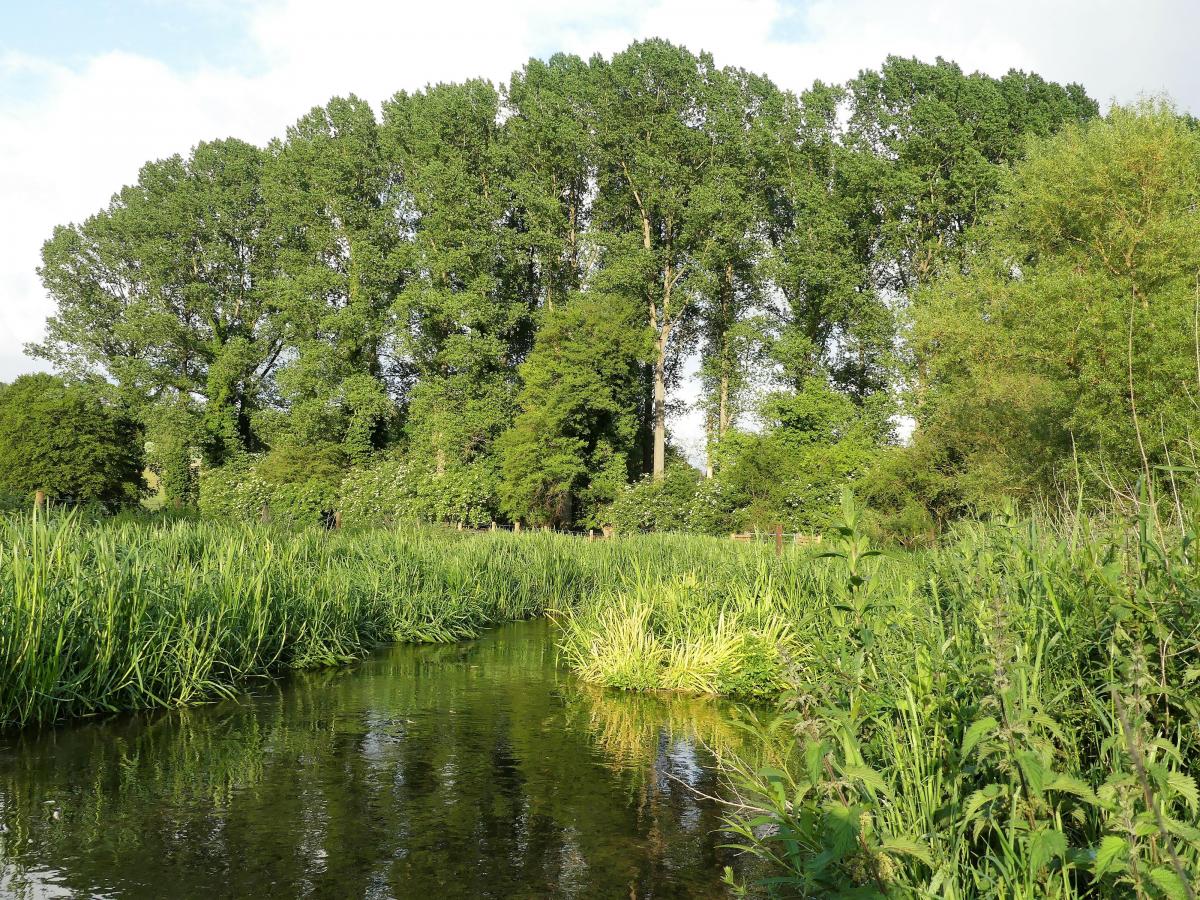
 Chalk streams are special to Hertfordshire. There are just over 200 in the world.
Photo: River Chess at Chorleywood
Water bubbling from chalk springs is clear and high in oxygen. Flowing over gravels, its temperature stays constant. When unaffected by misuse and contamination, it supports a unique diversity of wildlife.
Chalk underneath most of Hertfordshire was laid down between 100 and 88 million years ago (during ‘the age of dinosaurs’). Deep sea covered what is now southern England.
 The chalk was formed from microscopic plankton and fossilised creatures. Our river system was shaped more recently by the Anglian ice age: only 450,000 years ago.
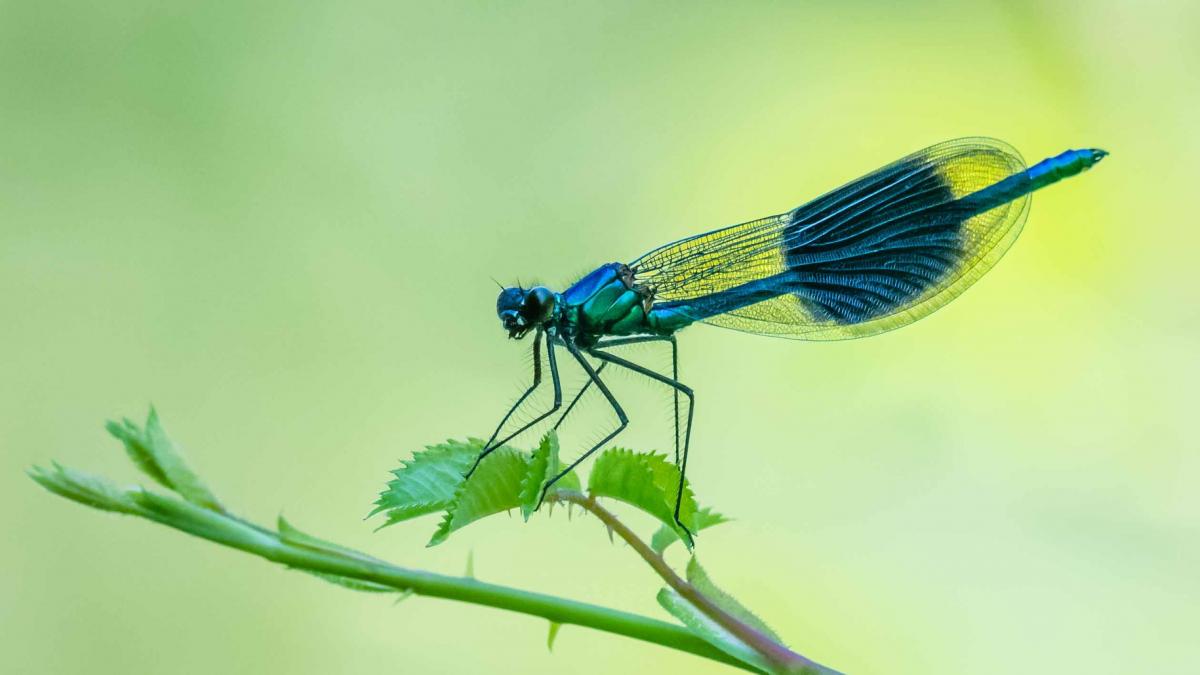
Photo: Banded Demoiselle © Allan Burrows
Rain in Hertfordshire seeps through the surface soils and reaches the chalk, which acts like a giant microscopic sponge. Most local drinking water is pumped from this chalk ‘aquifer’. But in times of drought water abstraction has contributed to a drying-up of rivers and damage to their delicate balance of nature.
Action is now being taken to reduce pumping for public water supply and encourage responsible water consumption. Everyone can help ‘save our streams’ by using water thoughtfully.
The River Ver
The river starts its 17-mile journey at Kensworth Lynch in Bedfordshire. It flows through Redbourn, St Albans, and Bricket Wood. It then joins the River Colne, a tributary of the Thames. Above Redbourn, the river is classed as a ‘winterbourne’ – sometimes dry in summer until autumn rainfall raises the water table in the chalk below.
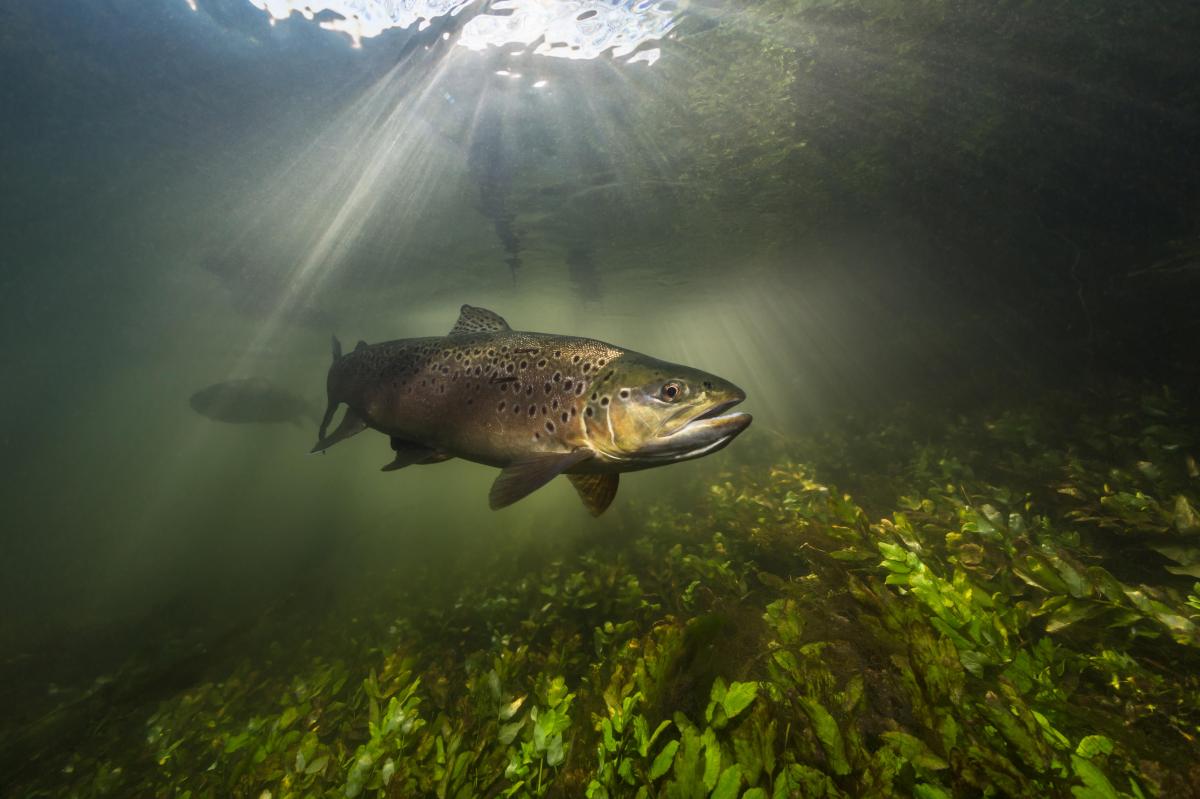 The River Ver is home to typical plants like watercress, Water Mint, water-crowfoots and the Blunt-fruited Water-starwort (see below). Brown Trout breed in the stream, together with small fish like the Bullhead, Stickleback and Minnow.
Photo: Brown Trout © Paul Colley
River birds include Kingfisher, Grey Heron, Little Egret, ducks, geese, Moorhen and Coot. In summer, resident Reed Buntings are joined by migrant warblers, Swallows and House Martins.
Photo: Kingfisher © David Hunt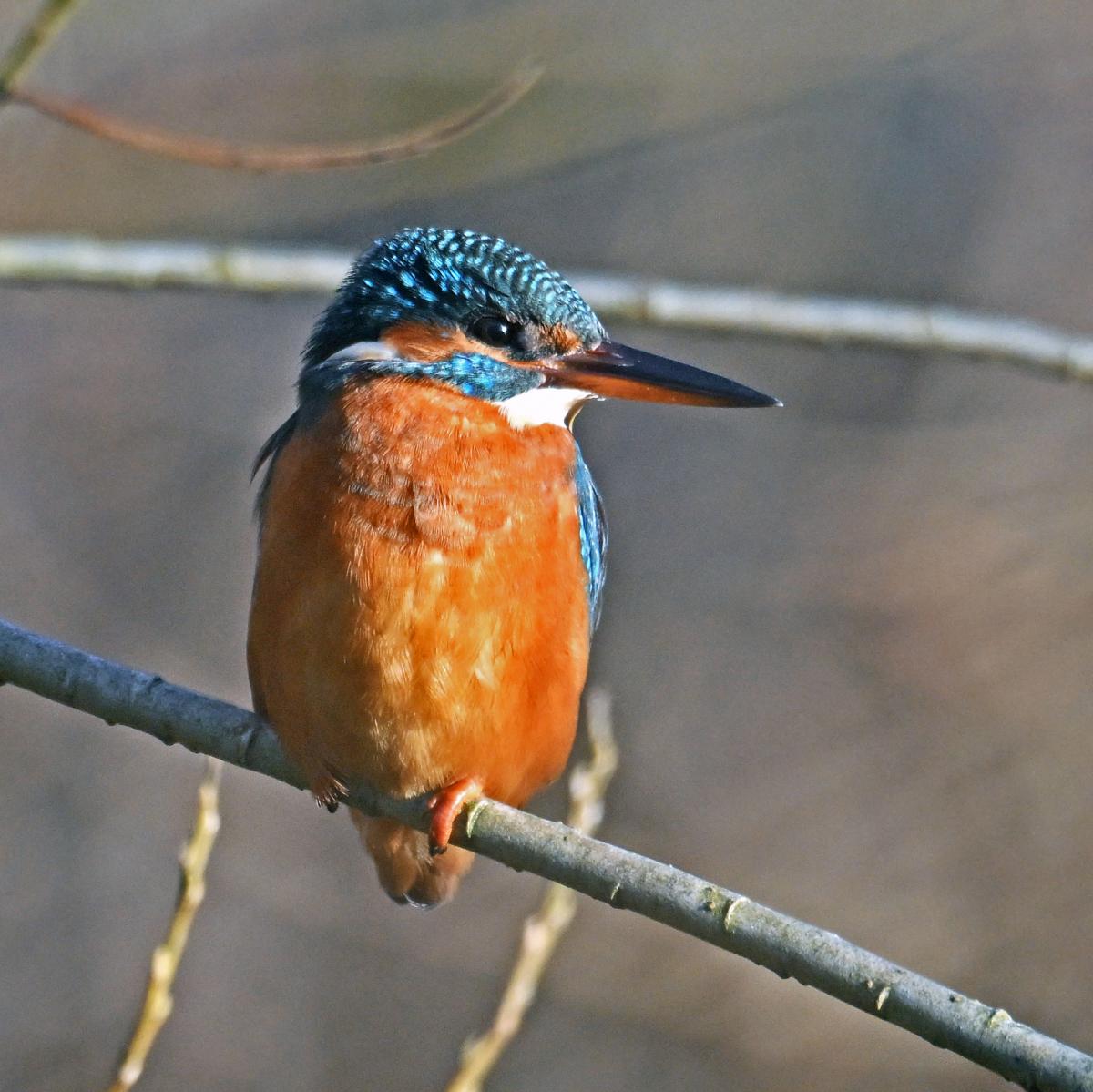
Swarming insects, such as mayflies, stoneflies and caddisflies, indicate the river’s health and ability to support other wildlife.
Photo: Mayfly © Allan Burrows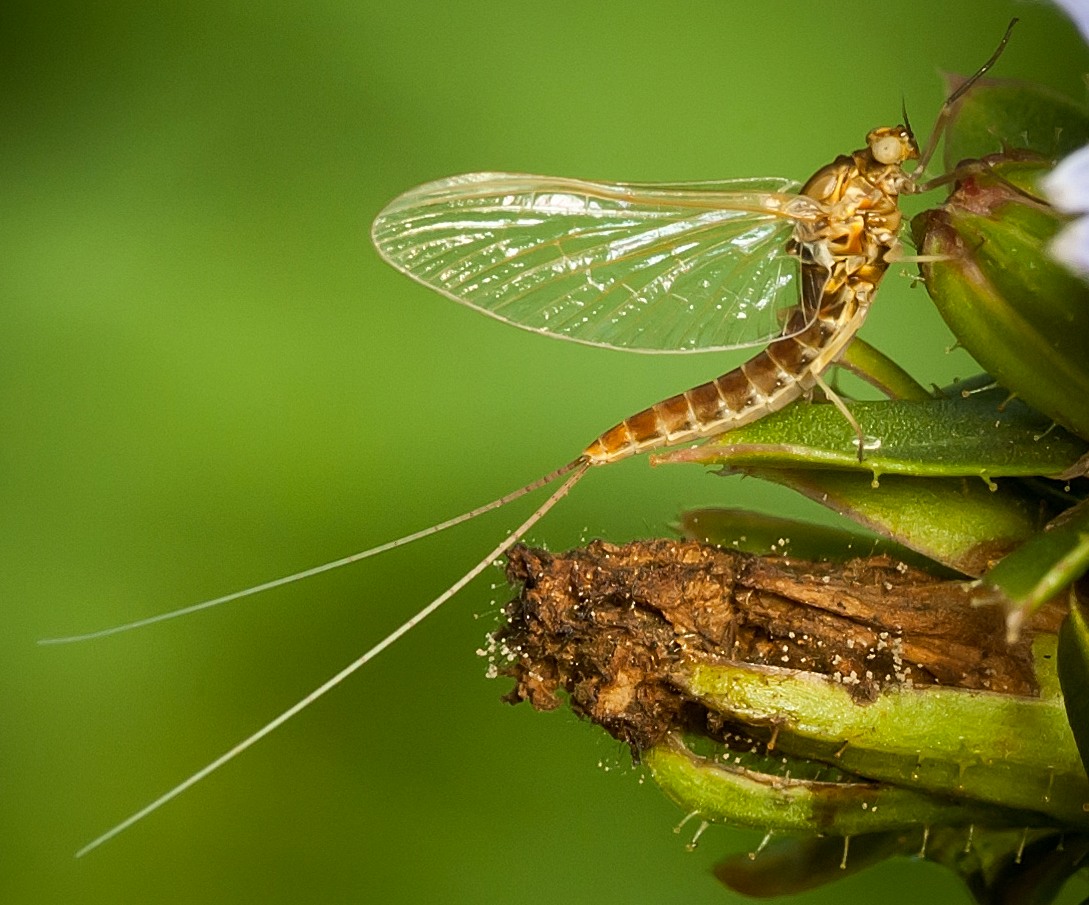
Walkers along the Ver may be lucky enough to see a Water Vole. This species was re-introduced four years ago. Loss of habitat and falling prey to American Mink (now being eradicated) had made it extinct across some Hertfordshire rivers.
Photo: Water Vole © Robert Kitchen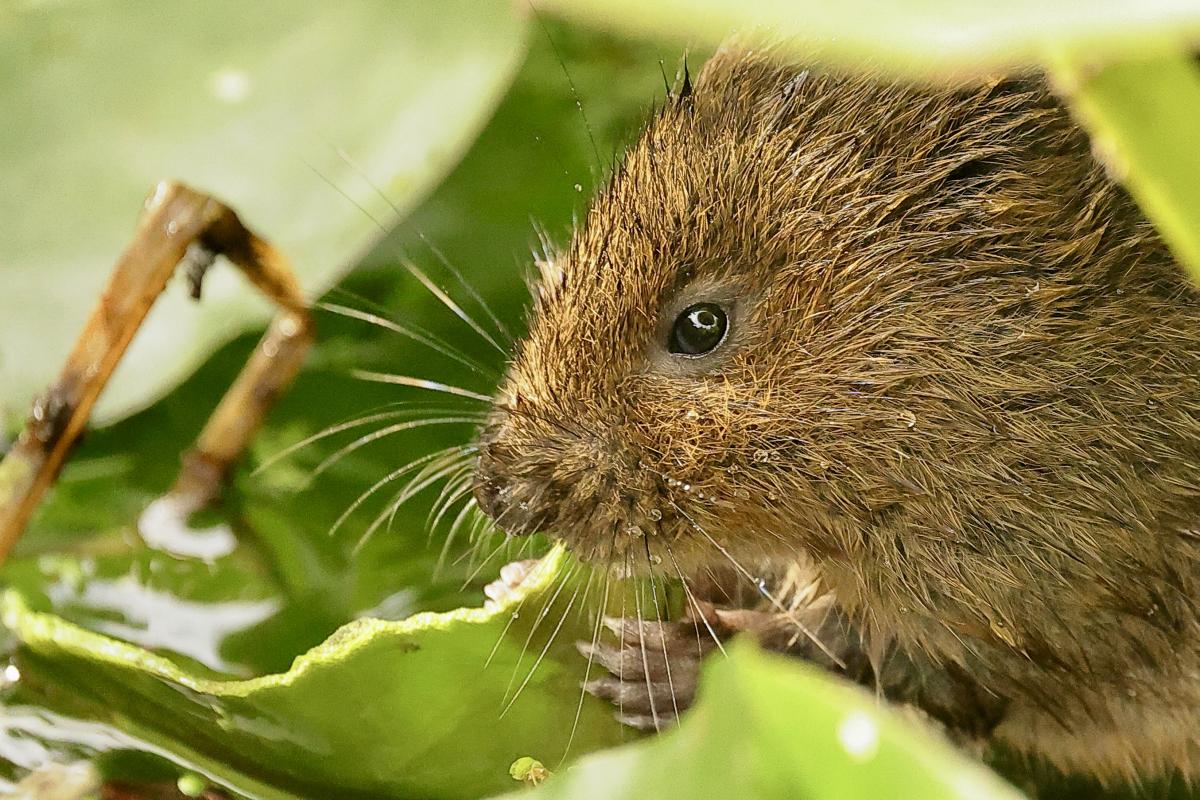
In a similar way, introduced, non-native plants like Himalayan Balsam and Japanese Knotweed can dominate river banks, out-competing native species.
Typical flora of the River Ver
by Astrid Biddle, co-county recorder for vascular plants
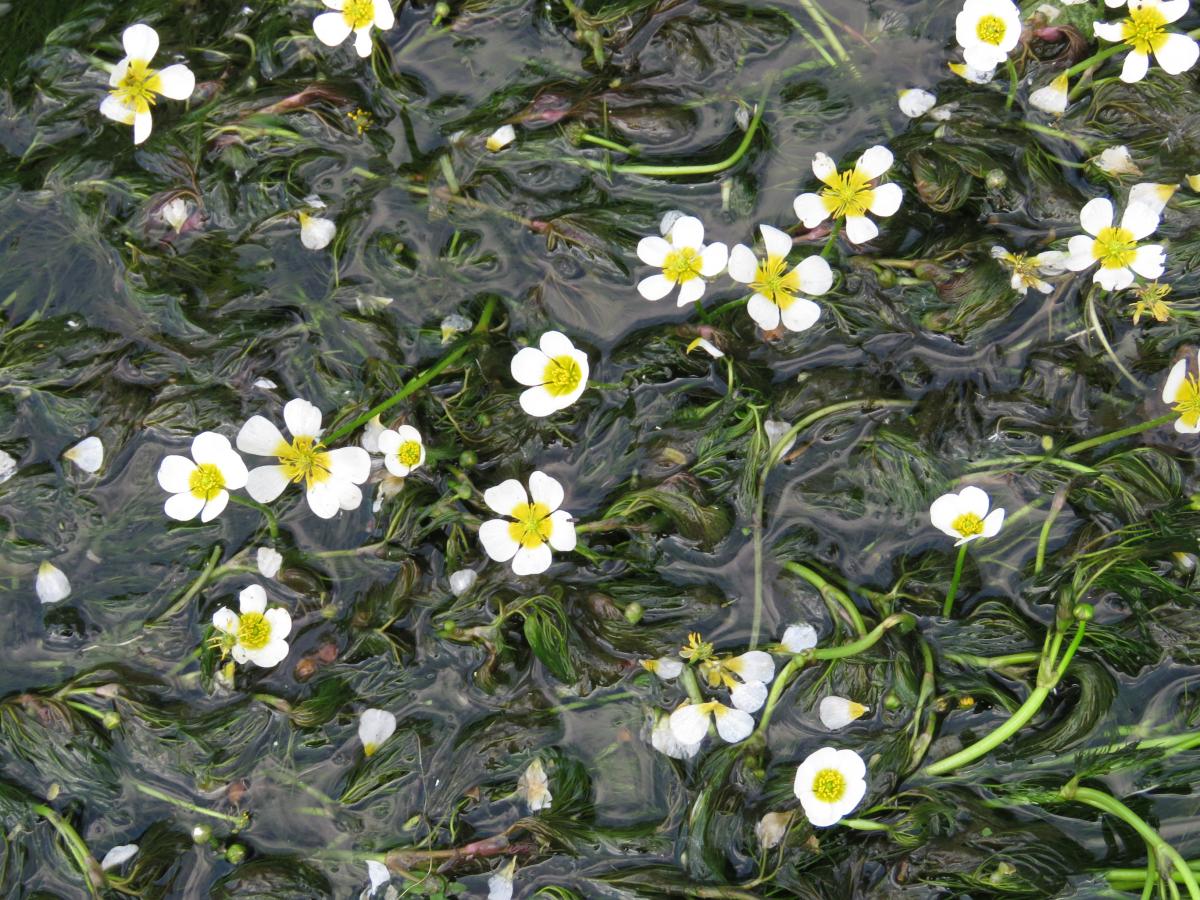 Stream Water-crowfoot Ranunculus penicillatus (Photo © Ian Denholm)
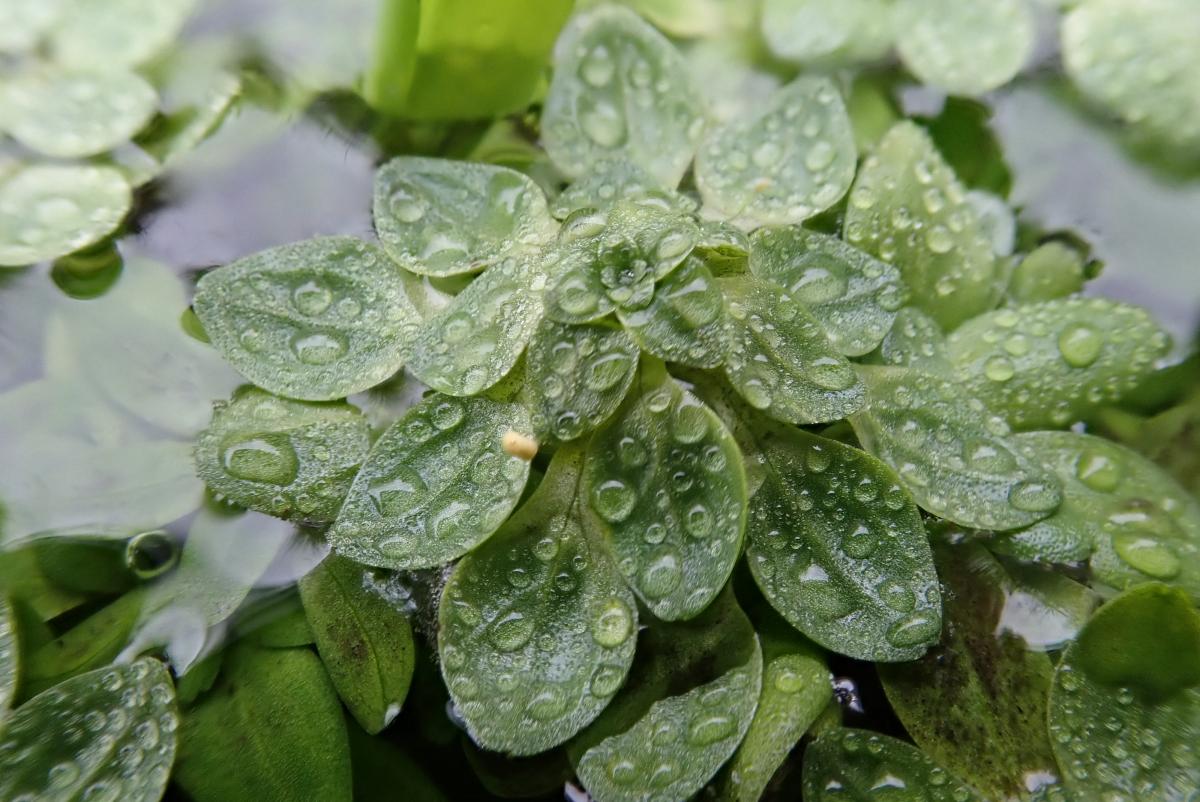 Blunt-fruited Water-starwort Callitriche obtusangula (Photo © Astrid Biddle) Other Water-starworts are present but much less so.
Water-cress Nasturtium officinale
Fool's-water-cress Helosciadium nodiflorum
Lesser Water-parsnip Berula erecta
Blue Water-speedwell Veronica anagallis-aquatica
Water Forget-me-not Myosotis scorpioides
Water Mint Mentha aquatica
Water Figwort Scrophularia auriculata
Brooklime Veronica beccabunga
Bittersweet Solanum dulcamara
Common Comfrey Symphytum officinale
Meadowsweet Filipendula ulmaria
Great Willowherb Epilobium hirsutum
Common Nettle Urtica dioica
Purple-loosestrife Lythrum salicaria
Yellow Iris Iris pseudacorus
Lesser Pond-sedge Carex acutiformis
Greater Pond-sedge Carex riparia
Branched Bur-reed Sparganium erectum
Reed Sweet-grass Glyceria maxima
Common Reed Phragmites australis
Alder Alnus glutinosa
Reed Canary-grass Phalaris arundinacea
Willows Salix sp.
Algal species significantly form the base of the food chain. Examples are:
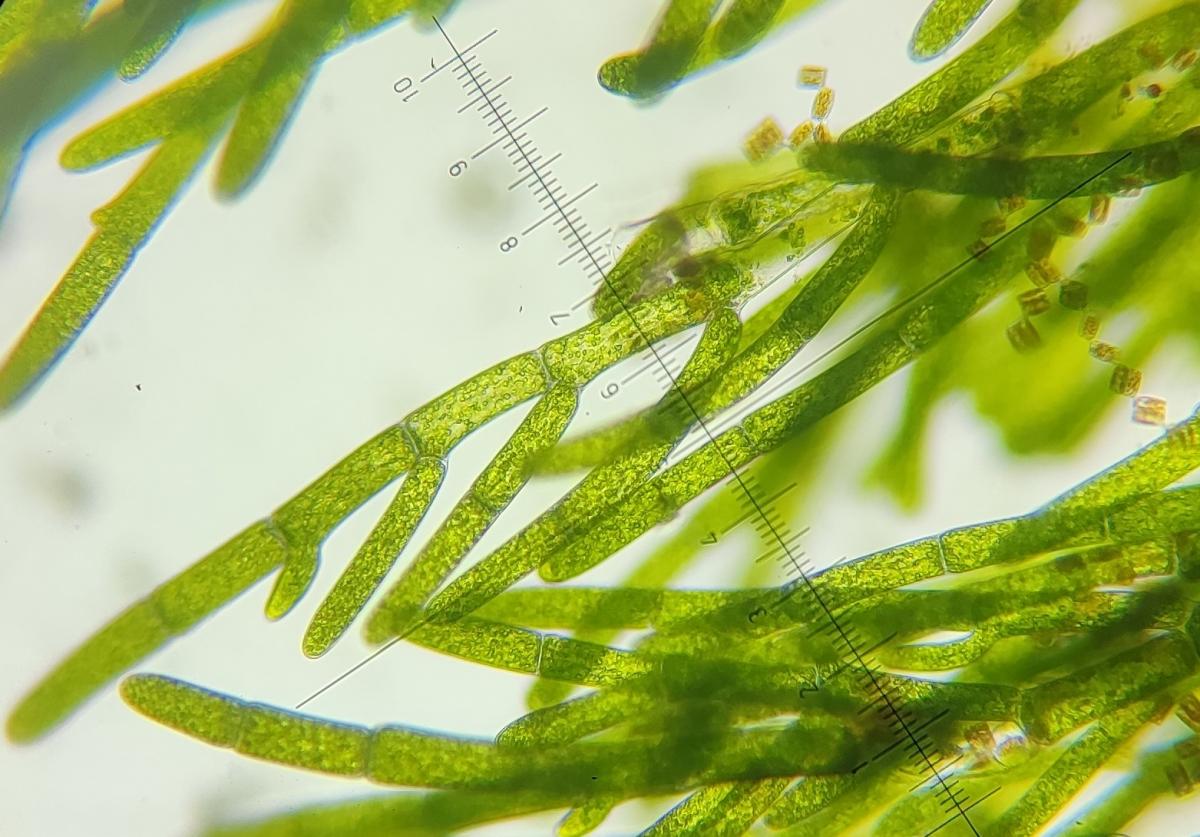 Cladophora glomerata (Photo © Astrid Biddle)
Vaucheria species
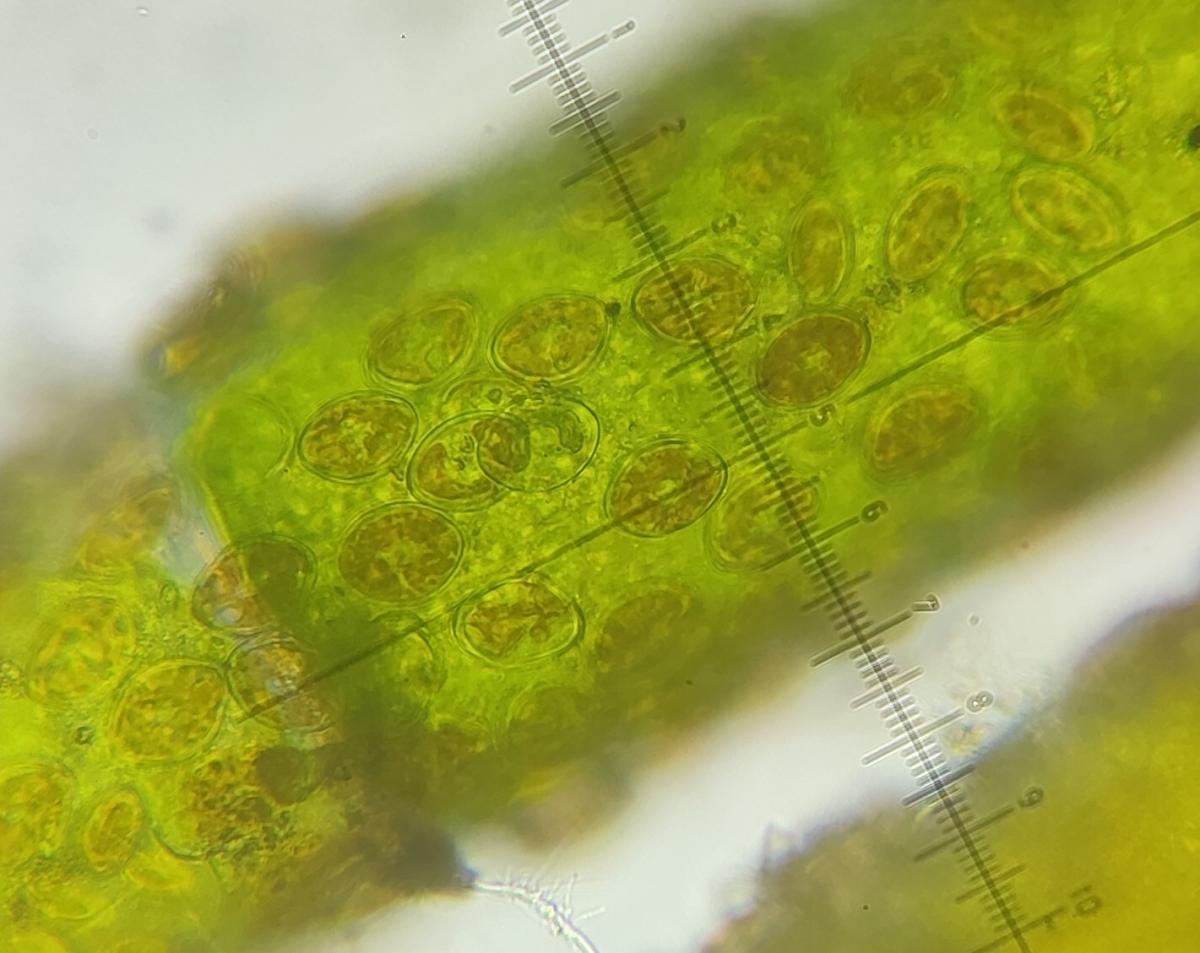 Diatoms (Photo of Cocconeis species growing on Cladophora glomerata © Astrid Biddle)
Bryophyte (moss and liverwort) examples:
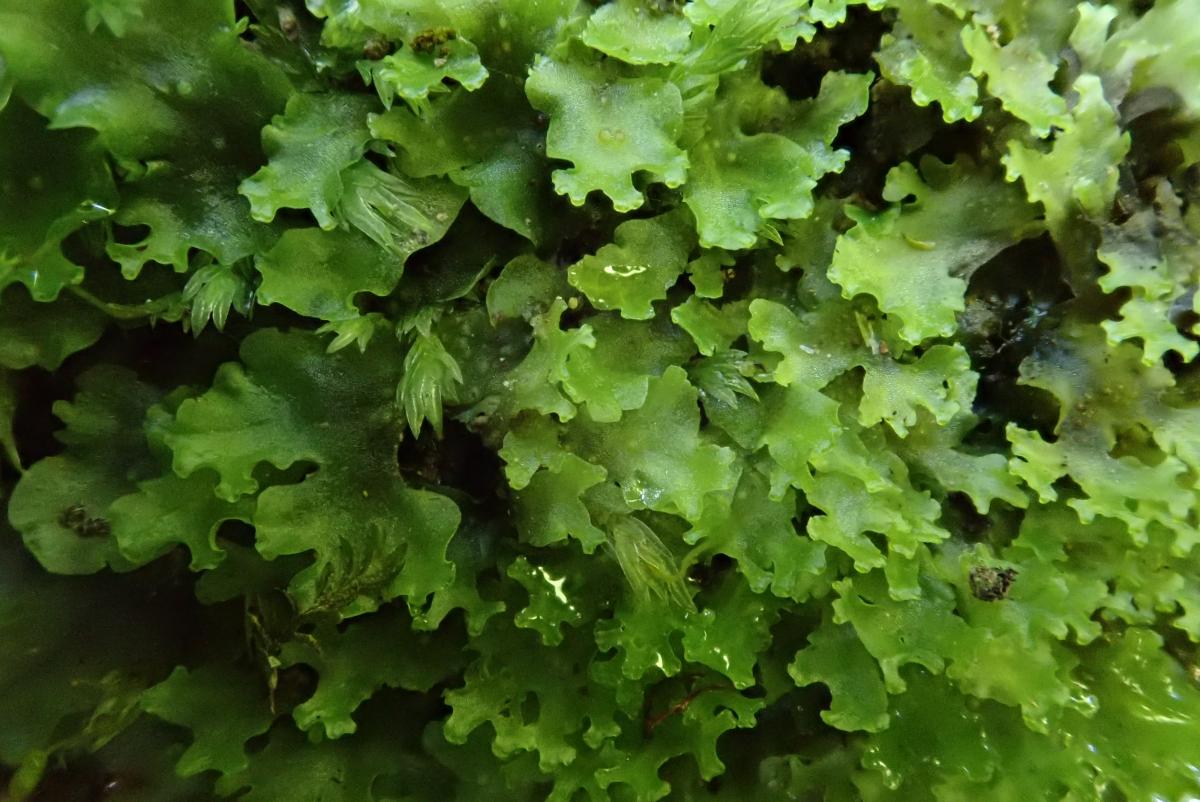 Endive Pellia Pellia endiviifolia (Photo © Astrid Biddle)
Kneiff’s Feather-moss Leptodictyum riparium
Further information about chalk rivers (with thanks to the Herts and Middlesex Wildlife Trust)
What is a chalk river?
Chalk rivers are beautiful and diverse ecosystems, characterised by varied plant and invertebrate populations and home to some iconic British species, such as brown trout. They are globally rare, with the vast majority found in southern England and the remainder in northern France.
Chalk rivers are found in areas of underlying chalk geology. In England, chalk rock stretches in a diagonal band across the southern half of the country, running from Wiltshire and Hampshire northeast across the Chilterns to East Anglia.
How are chalk rivers formed?
Chalk is porous, making it extremely permeable to water. In areas of chalk geology, rainfall slowly filters down into the underlying rock, where it is stored as groundwater in underground aquifers. This groundwater emerges at springs, both at the top of river valleys and at various points along the course of a valley, and a chalk river is formed from the upwelling water.
The unique conditions within a chalk river system result from the properties of this groundwater. Because it has been filtered through chalk it is pure, crystal clear, mineral rich and relatively alkaline. The temperature of the springs is relatively constant throughout the year - around 10oC. A classic chalk river is influenced relatively little by overland flow and run-off, with typically 80% or more of flow coming from groundwater.
Many chalk river systems are characterised by having ‘winterbourne’ sections in their upper reaches. These winterbournes flow only when the underground aquifers are at their most full – usually in the late winter months. At these times the high groundwater levels enable dormant springs at the top of river valleys to flow once more, creating a winterbourne.
Seasonal cycle
A classic chalk river undergoes an annual cycle, based on the relationship between seasonal rainfall patterns, temperature and vegetation growth. In winter, water levels are high but the growth of aquatic and marginal plants is low. The lack of in-channel vegetation means that the channel is at its highest capacity, and can contain the higher flows experienced at this time of year.
In the summer months, growth of in-channel plants such as watercress is at its highest, but water levels are usually at their lowest. The high plant growth narrows the channel, but allows a similar depth of water to be maintained.
Chalk rivers are characterised by physical and morphological features which distinguish them from other types of river.
- Gentle meanders – chalk rivers are typically gentle systems with little erosive power
- Low bank profile – due to their lack of erosive power, chalk rivers typically do not cut incised channels
- Clean gravel bed, perfect habitat for invertebrates and spawning fish
- Crystal clear water
- Beds of in-channel plants such as water crowfoot and water starwort
- Diverse stands of riparian and marginal vegetation – ideal habitat for insects and water voles
- Open areas which let light reach the channel (70% open to 30% shaded is ideal for a chalk river)
People and chalk rivers
Chalk rivers have a long history of use by industry. Consequently many have been modified by the construction of water mills and their associated mill races, mill ponds and weirs. Watercress beds were also a common feature of many chalk rivers, especially in the Victorian age. Only a handful of active watercress beds remain, but remnant watercress beds can be found along many chalk rivers.
Water meadows were historically a typical wetland feature of many chalk rivers, although few are now actively maintained. Complex irrigation systems aimed to keep the grassland damp. This had multiple benefits, including fertilizing the soil via water-borne sediment and keeping the grassland alive during droughts. Importantly, it also prevented the soil from freezing in winter, ensuring the ‘early bite’ which allowed sheep to graze the meadows earlier in the year than would otherwise be possible.
Chalk rivers are now important recreational resources, especially for anglers. Many are famous fly-fishing rivers, supporting brown trout, grayling and other species.
Increasingly the educational potential of chalk rivers is being utilized, with school and university students visiting them as part of their studies of ecology, natural history, water management and geography.
Threats
Chalk rivers face numerous threats. The biggest threat facing many of these rivers is groundwater abstraction. The groundwater which feeds chalk river systems is a cheap, clean and convenient source of drinking water for local populations, which has been exploited for decades. Across southern England many pumping stations have been built, which bore down into the chalk aquifer and pump out the groundwater to supply local towns and villages. Consequently, the groundwater level has been lowered and many of the springs which used to feed these chalk rivers have dried up, leading to drastically reduced flows or even completely dry river channels. Often many of the other problems facing chalk rivers are made worse by these low flows. [In Hertfordshire, action is being taken to reduce pumping for public water supply and encourage responsible water consumption.]
Pollution is another threat, whether in the form of run-off of sediment and chemicals from agricultural land, misconnections from domestic water pipes, overflows from sewage treatment works or run-off of heavy metals from roads and urban areas. Chalk river systems are characterised by their high water quality and many of their species have evolved in this pure water. This makes them extremely sensitive to any decline in water quality.
Invasive non-native animals like American Mink and Signal Crayfish are severely impacting on native species such as Water Voles and White-clawed Crayfish. Non-native plants, for example Himalayan Balsam, Japanese Knotweed and Giant Hogweed, can threaten native biodiversity, buildings and even public health.
Destruction of bankside and floodplain habitat via construction, disturbance, agriculture or mis-management can destroy the homes and food sources of many species.
Physical changes to the river itself can also lead to huge impacts. Many chalk rivers have been modified by dredging, straightening, deepening, culverting, canalisation and the construction of weirs. All these things impact on the fragile ecology of chalk river systems, changing the way the river behaves and flows, affecting the ability of species to move through the system, and destroying habitat.
Unfortunately many chalk rivers face a combination of these problems, leading to them being one of the most threatened habitats in the world. It is vital these globally rare, beautiful and diverse ecosystems are restored and protected for future generations
References and acknowledgements
This guide was originally compiled and written by Charlie Bell, Hertfordshire Living Rivers Officer with Herts and Middlesex Wildlife Trust. The Living Rivers Project is funded by the Environment Agency and hosted by Herts & Middlesex Wildlife Trust.
The guide received a generous donation from the John Davis Fund.