


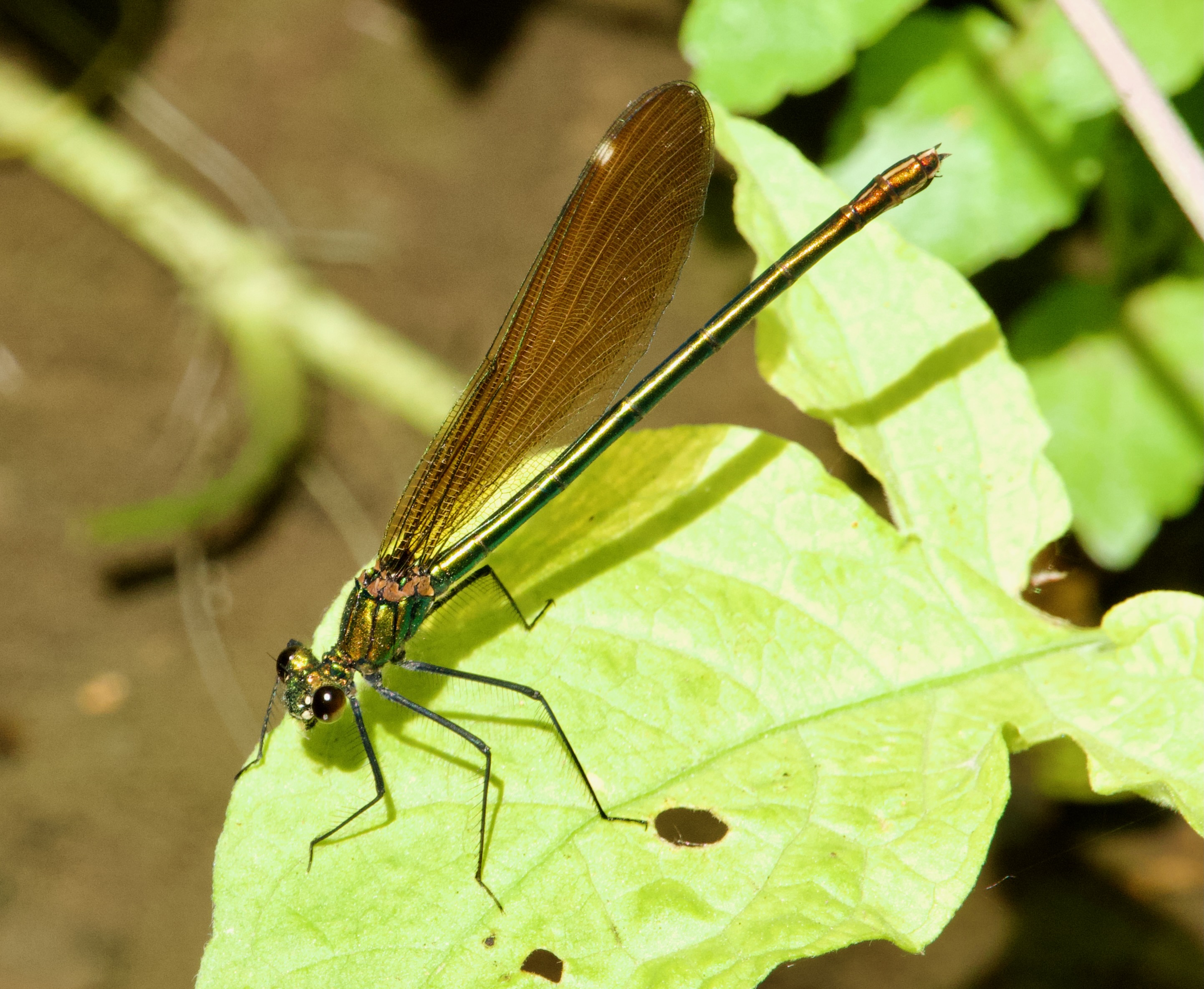
We are now in the first few days of June in the penultimate years of the new six year Hertfordshire Dragonfly Atlas Survey which is planned to run until the end of 2027.
Since the current survey period began in 2022, over 320 observers have contributed just over 14,000 records of 32 species, which is an amazing achievement. For context, the six years of the previous survey, from 2000 to 2005 produced 14,671 records of 22 species that were submitted by 119 recorders.
The increase in the number of species reflects the colonization of Hertfordshire by new species, including some that had only rarely been recorded in the U.K. at the time of the first survey. Some of these species are now widespread in the county, while others remain extremely scarce or occur only as occasional wanderers. I would like to be able to say that the large increase in the number of people who have submitted records is because interest in dragonflies and damselflies has significantly increased, but the reality is that this is the result of the ease with which people with a general interest in wildlife can submit records via internet websites, and many observers have so far only submitted a single record of a dragonfly or damselfly that happened to grab their attention.
All records that contain sufficient detail are equally valuable though, and some of these 'single records' may well end up being the only record of a species from that particular tetrad - particularly when they come from urban areas or farmland where the only breeding habitat for dragonflies is in gardens or on other private land.
Although I am confident that a comparable level of coverage to the previous survey will be achieved, there are still some parts of Hertfordshire that haven't yet been properly covered, mainly in the more northern parts of the county. All records will be gratefully received, especially if people are able to visit some of the parts of the county that have not yet produced many records, or are able to get permission to visit private land that has not yet been surveyed in other areas.
Records can be submitted via the HNHS website here, via iRecord or by emailing them to dragonflies@hnhs.org
If anyone already uses iNaturalist, records that are uploaded there will be fed into iRecord if they meet iNaturalist's "Research Grade", but only if the 'licensing' for records that you upload has been set to allow this. Also please consider adding a real name to your profile as the 'display name' as the observers name forms part of a biological record.
Maps of Hertfordshire showing which tetrads each species has been recorded in so far during the 2022 to 2027 survey, and where they were recorded during the 2000 to 2005 survey, along with flight periods plotted from the records that were received by the end of 2025 can be found in a PDF via the link below:
Hertfordshire Dragonfly Atlas Survey 2022 - 2025