

"The Stats" (8pm on 12th Oct)
| This Week: | Totals | vs last week | vs same week 2020 |
| Total No. of Species | 73 | ↑ 5 | ↑ 18 |
| Total No. of Birds | 6,137 | ↑ 1,972 | ↑ 4,098 |
| To Oct 12th | 2021 | vs 2020 |
| Total No. of Species | 94 | ↑ 6 |
| Total No. of Birds | 37,756 | ↑ 13,789 |
While westerly winds dominated for much of the week a spell of easterlies over the weekend combined with mild weather was a welcome boost to garden vismig. This week compared to the same week last year saw 18 more species recorded taking the total for the Autumn Garden Vismig Watch to 94 begging the question of whether 100 species can be reached?
It was certainly a busy week as
the arrival of winter visitors began in earnest. Summer visitors have all but gone with just 87 records of Swallow, 61 of which passed on 7th. Similarly, just 24 House Martins were noted, again peaking on 7th with 17. Chiffchaffs continue to make their way through gardens, many no doubt undetected.
The first Redwings are making inroads but still no Fieldfares. Chaffinches however are moving in significant numbers, mainly in a north-westerly direction, with nearly 400 recorded, peaking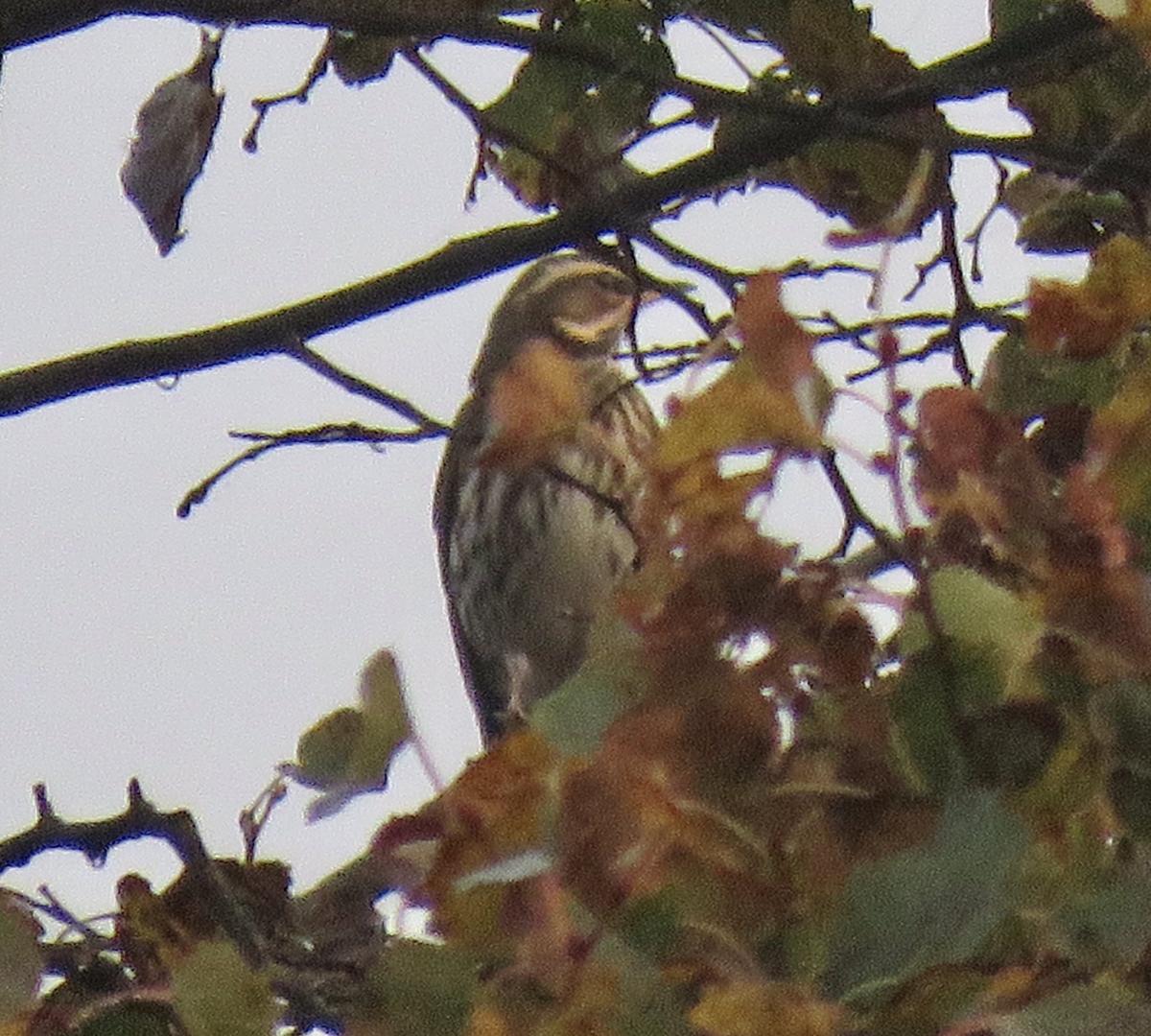 on 9th with 167. With them have come a few Bramblings with 6 records from 2 gardens. It seems to be a good autumn for these birds so we can expect more. Familiarity with their call is key in picking these birds up in flight amongst the Chaffinch flocks.
Siskins are also arriving in good numbers with 184 recorded but just a single Lesser Redpoll recorded so far over a Garston garden. Meadow Pipit passage is past its peak but nevertheless 84 birds were recorded on 9th. Skylarks were also more evident with 111 birds noted from 6 gardens while Linnets, Greenfinch, Goldfinch and Pied Wagtails were also recorded in larger numbers. One St Albans garden also recorded both Reed Bunting and Yellowhammer passing overhead.
Other highlights included a flyover Mandarin Duck and a scarce Great Black-backed Gull on 10th, both from a St Albans garden and both new for the Autumn Garden Vismig Watch. Of non-avian interest too, Pipistrelle bats are still out hunting at dawn and dusk and one St Albans garden saw a Noctule bat flying NW on 8th – the female of the species is an occasional migrant.
Looking ahead we can expect Redwing arrival to increase significantly, indeed as I write this it already has! With it will hopefully come the chance of scarcer migrants such as Hawfinch – often moving with Redwing flocks. Fieldfares will be on the tails of Redwings and Woodpigeon movement (including Stock Doves and Feral Pigeons) will continue to grow towards its peak in early November.
Of course, the hope is for something rare and this coming week last year saw a Yellow-browed Warbler in a St Albans garden. It is entirely possible and just this last week a garden on the Herts-Essex border hosted a Yellow-browed Warbler and a Firecrest was seen in Maple Cross garden – all good reasons to keep looking!
Keep updating the Googlesheet and maybe we can get to 100 species before November is out!

